Over the first half of 2026 I built and ran the workflow for production pipelines in Claude Code. Skills, slash commands and subagents carry one job each, with named checks between the draft and the reader. The engine on this route produced checked cricket editorial around IPL GPT, a statistics product. The framing and the final call on every piece stayed with me.
The engine
Skills · Commands · Gates
The cricket engine is a pipeline of single-purpose parts: three slash commands, a shelf of skills, and a gate between every stage. The commands stay few on purpose. Deciding what runs is a conversation, so each series plan lives in a brief file that the build routes on. The effort went into skills that emulate research-led data storytelling, and the parts that earn the polish are the checks.
data-minerdrives the browser against IPL GPT; mechanical capture, never interpretation
/research-analystwhere an edition begins: what runs is settled with me, in conversation. The early per-series commands were retired into it
/match-notethe short lane: a single card on match day, about half an hour. The receipt below is one
brief.mdthe approved plan, on file
/build-editionreads the brief, dispatches the specialists, and re-dispatches on the verdicts
writer
chart engineer
carousel designer
cross-validateevery figure audited against ESPNcricinfo and Cricbuzz; discrepancies logged, reconciled or thrown out
voice-checkregister, punctuation budget and a census of AI writing crutches; reports red, yellow or green
design-reviewfour passes over every chart and slide: adversarial design, typography and overflow, final visual QA, annotations
until it all reads PASS
_ready-to-publish.mdthe stamp: the worst verdict above it holds the whole edition
post
Workflow receipt
GT vs RCB · 30 April 2026
One question, followed from brief to published card. Step the run.
01 · The /match-note brief
Question
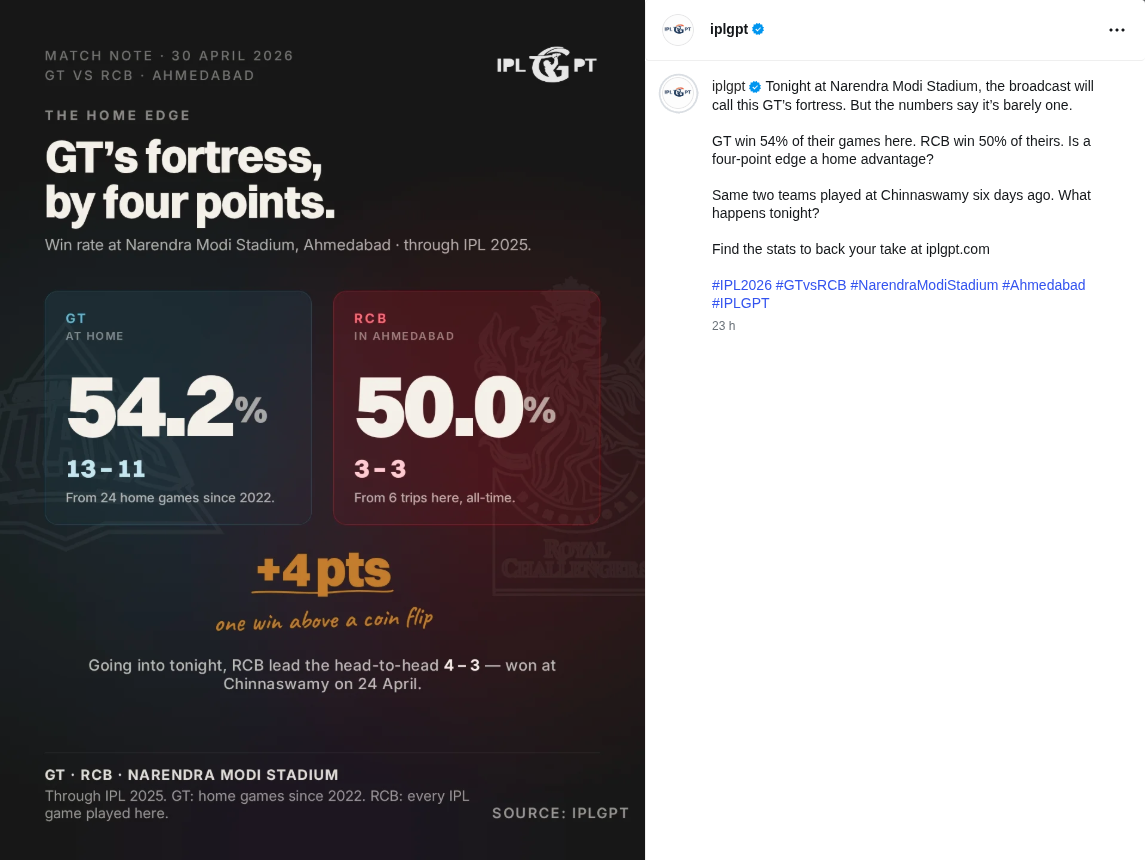
Would Ahmedabad deserve the broadcast's fortress framing once GT's home record was compared with RCB's record at the same venue?
The record put the host barely above a coin-flip rate at its own ground.
My call: challenge the familiar line without claiming this was the smallest home edge in the league.
02 · The product query
Product data
IPL GPT's checked cache supplied GT at 13-11 in Ahmedabad through IPL 2025, a 54.2 per cent win rate. RCB stood at 3-3 there, or 50.0 per cent.
Three rows from the cache went into the card.
Boundary: these venue figures came from IPL GPT. I selected the comparison and its editorial frame.
03 · The cross-validate audit
External audit
The GT total differed from one external table: 24 matches and 13 wins against 22 and 12. The two missing matches were the 2022 and 2023 finals at the venue, one won and one lost. Including those playoffs reconciled the denominator while leaving the win rate near 54 per cent. RCB's 3-3 venue record matched the external source exactly.
“Minor divergence, acceptable, reconciled.”
04 · The correction gate
Editorial correction
The first draft carried the cache's through-2025 head-to-head figure of 3-3. The stale scope was caught before publication. Current scorecards confirmed RCB's win on 24 April 2026, so the published context became 4-3, with the venue rates explicitly scoped through IPL 2025.
“Caught by user pushback before publish.”
Final gate: I checked the correction and approved the scoped wording.
Published outputTheir fortress, by four points. The final card preserves the product figures, states their through-2025 scope and uses the corrected 4-3 head-to-head context.
A longer statistical story
Carousel published · essay unpublished
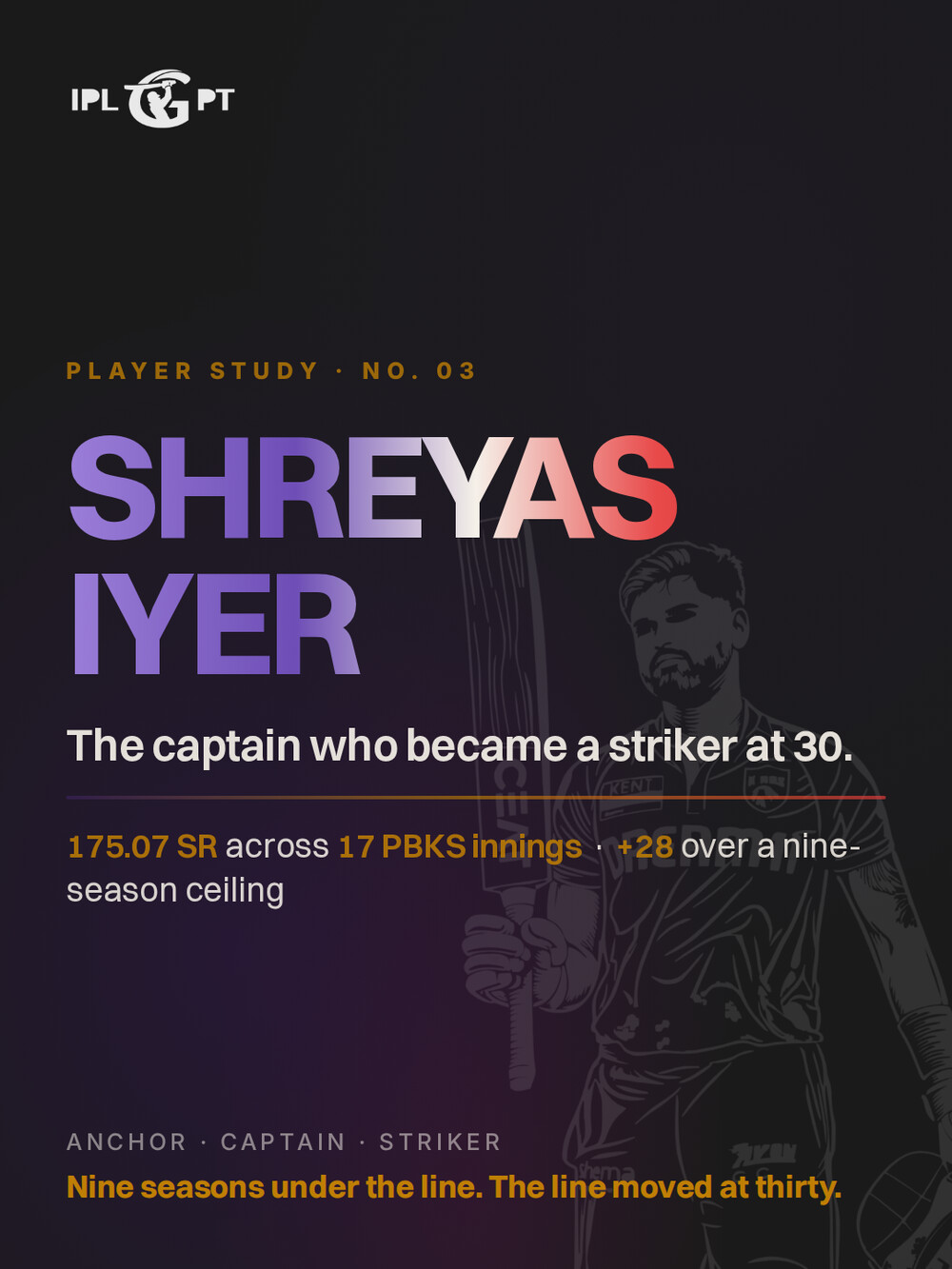
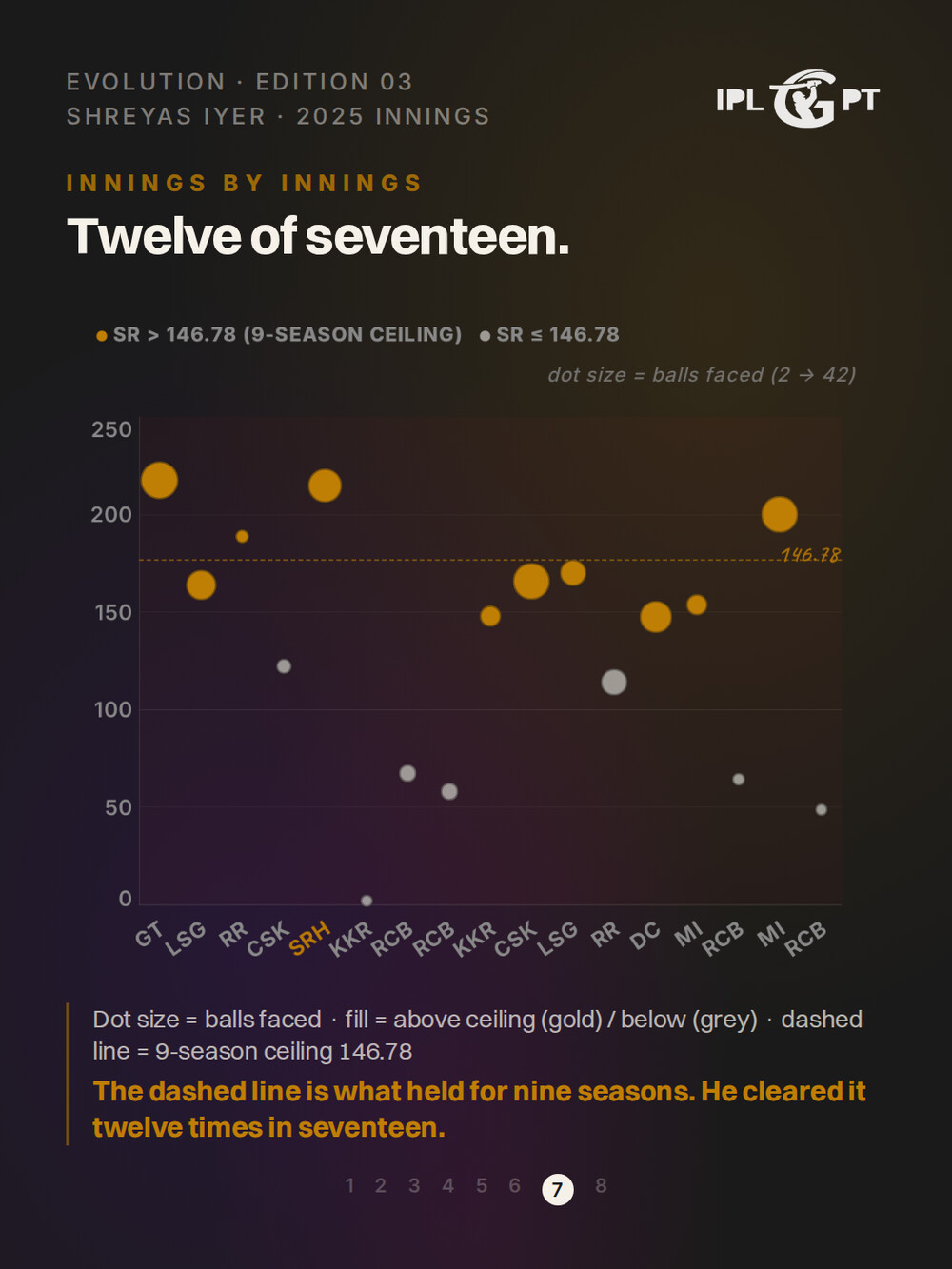
The captain who became a striker at 30
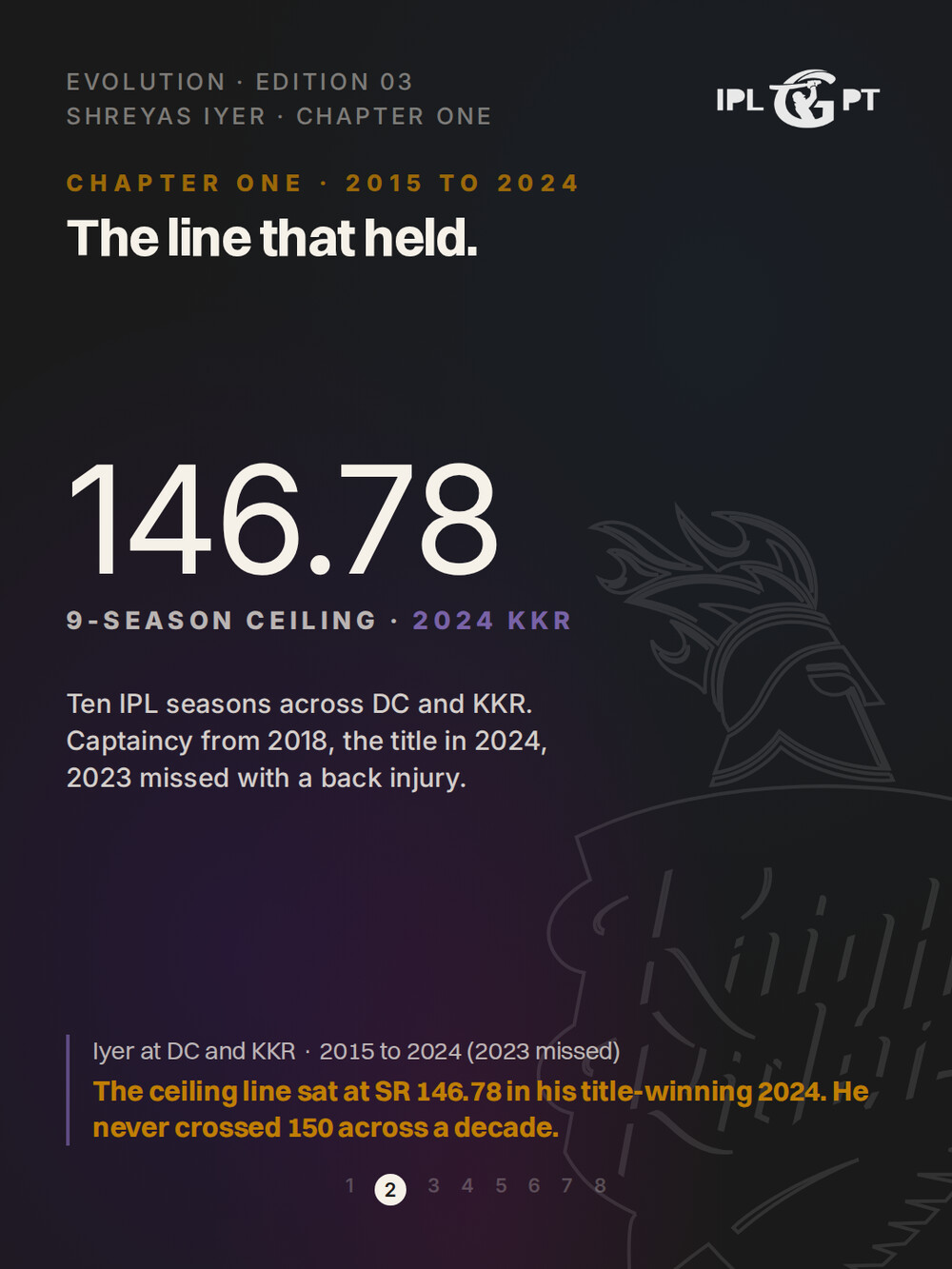
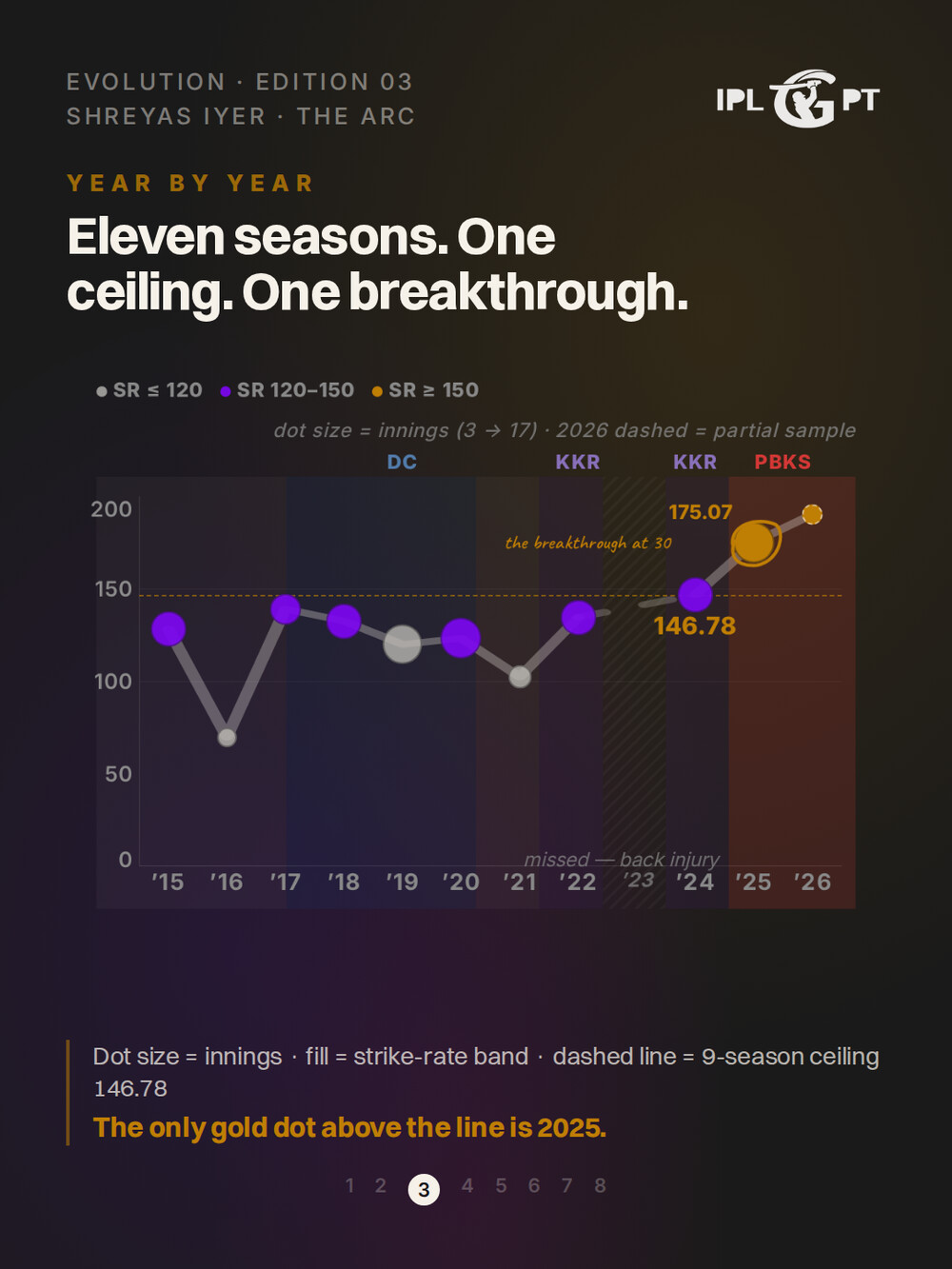
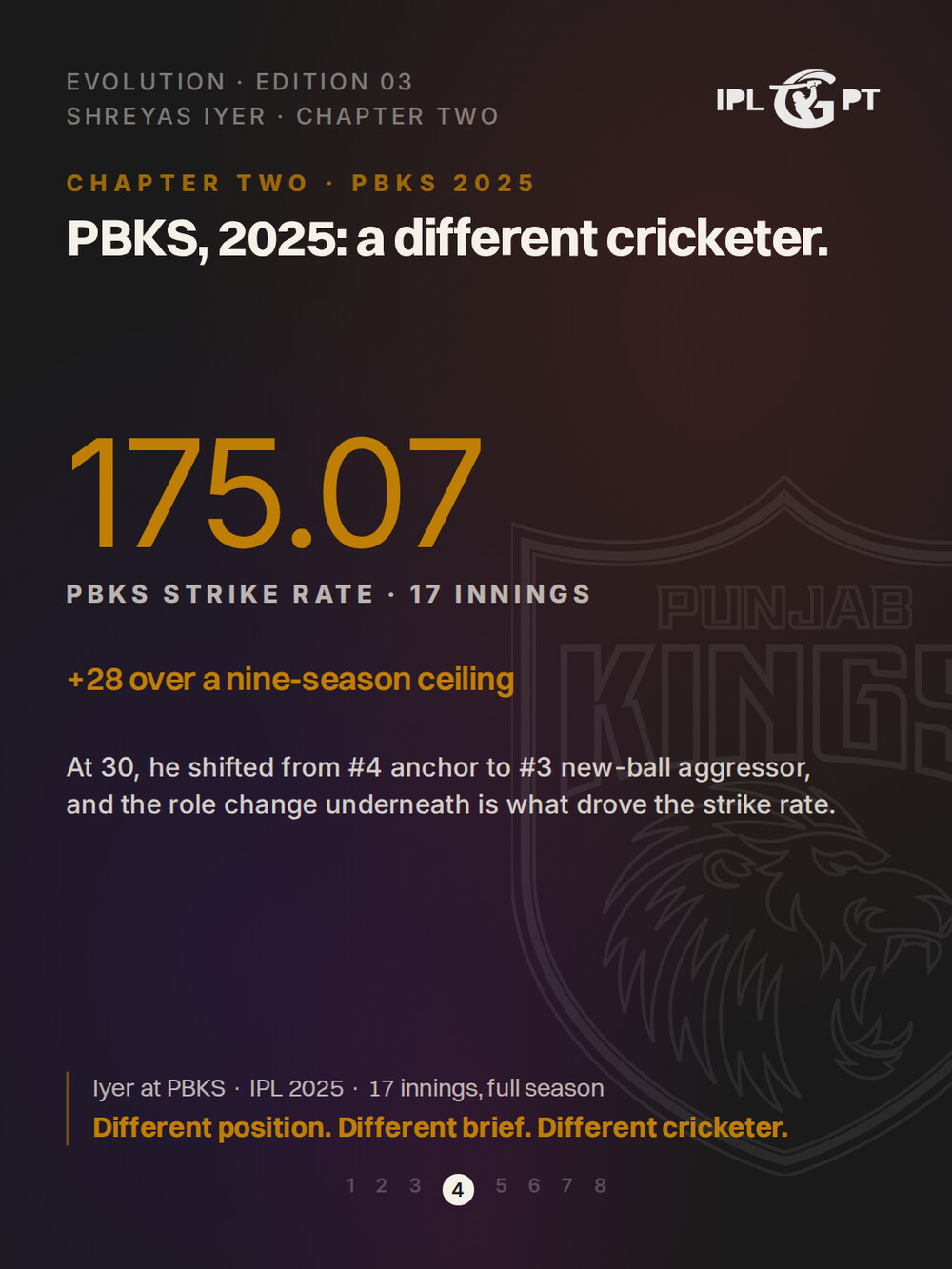
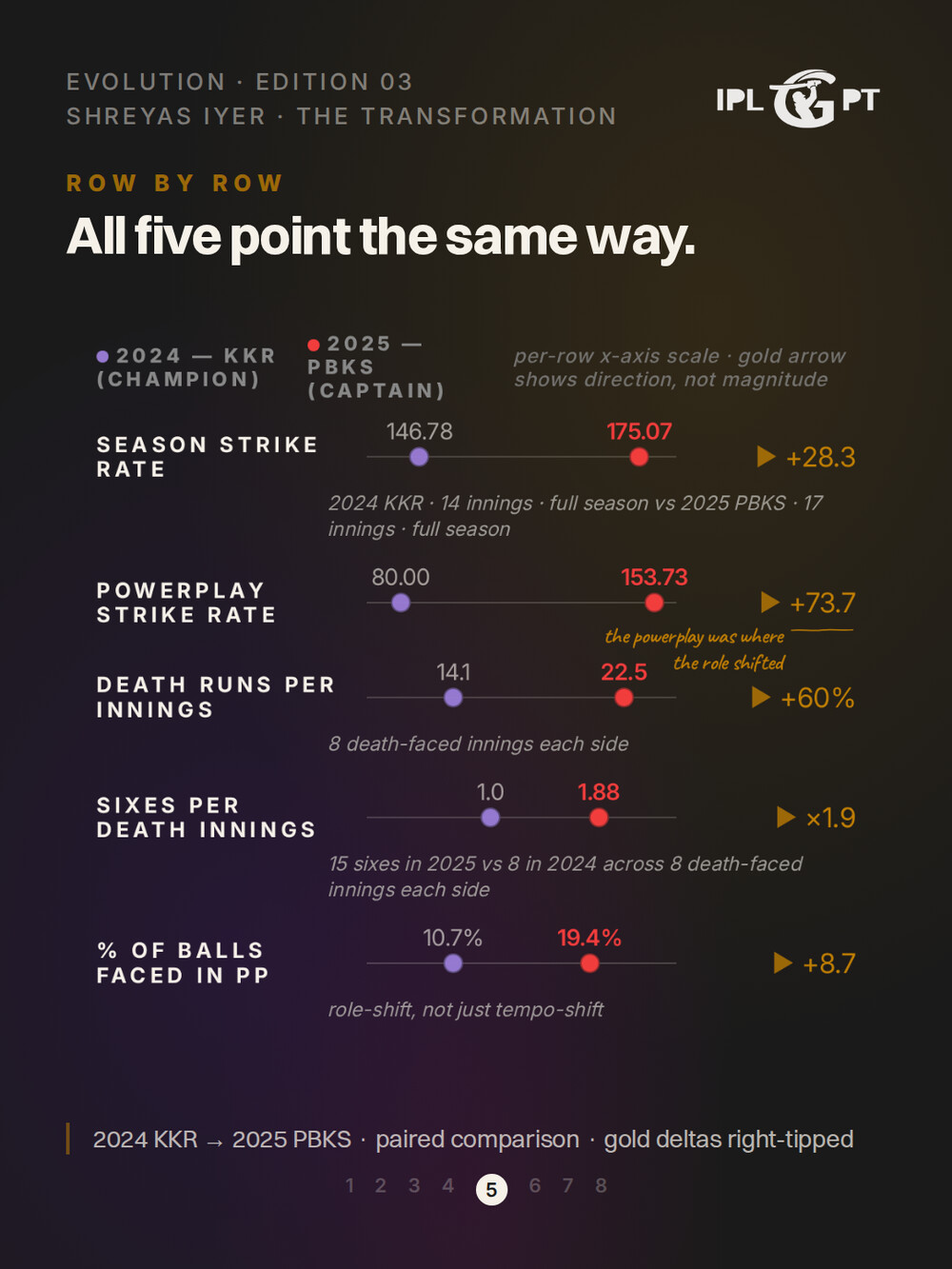
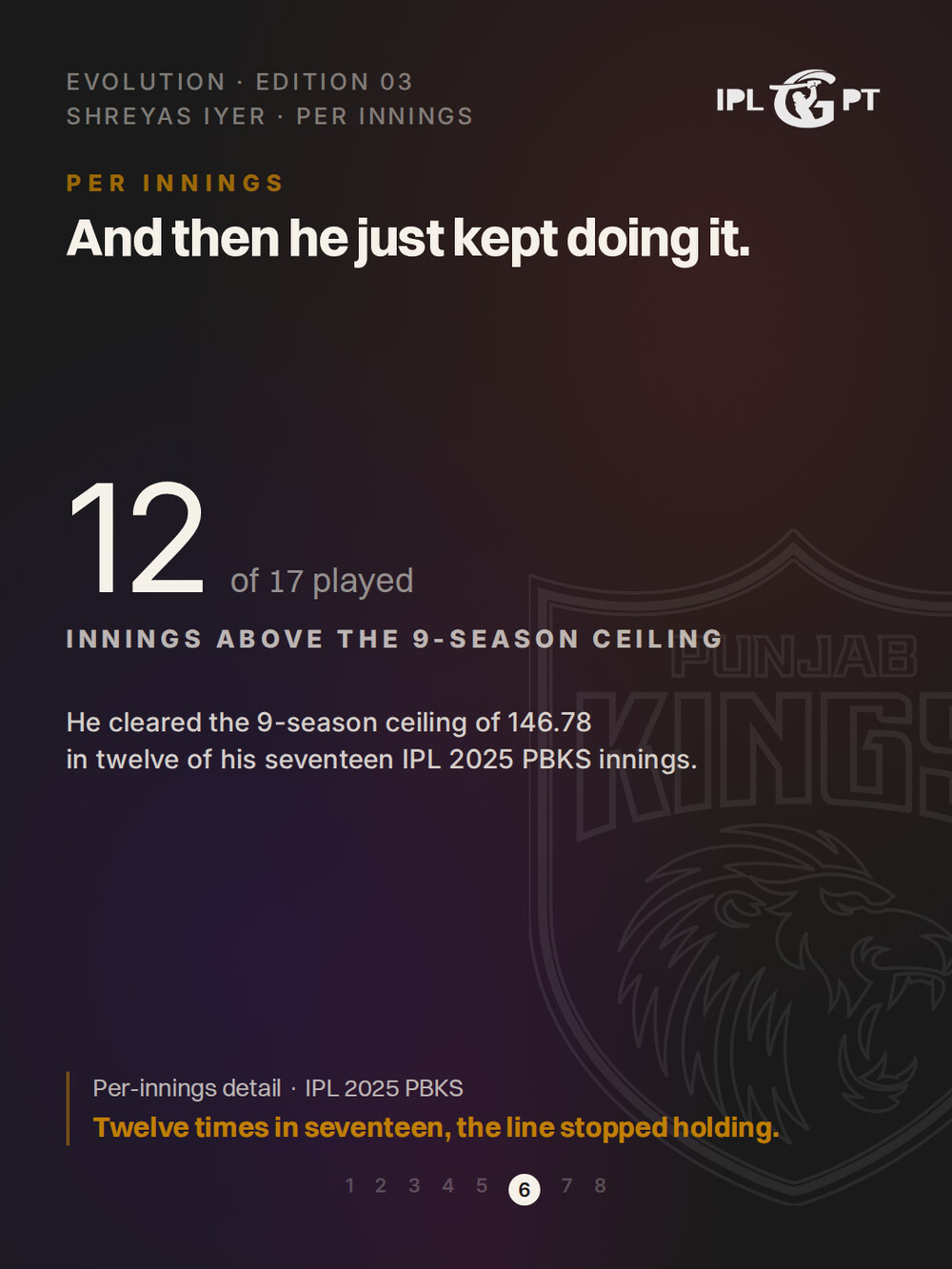
Five measures moved together. This edition ran the full loop: writer and editor passes, engineered charts, a voice check and the four-pass design review before the slides were stamped. The eight-slide carousel ran on Instagram; the long-form version stayed unpublished.
Player study · May 2026The eight slides as they ran on Instagram.
Four editions, tightening
March to May 2026
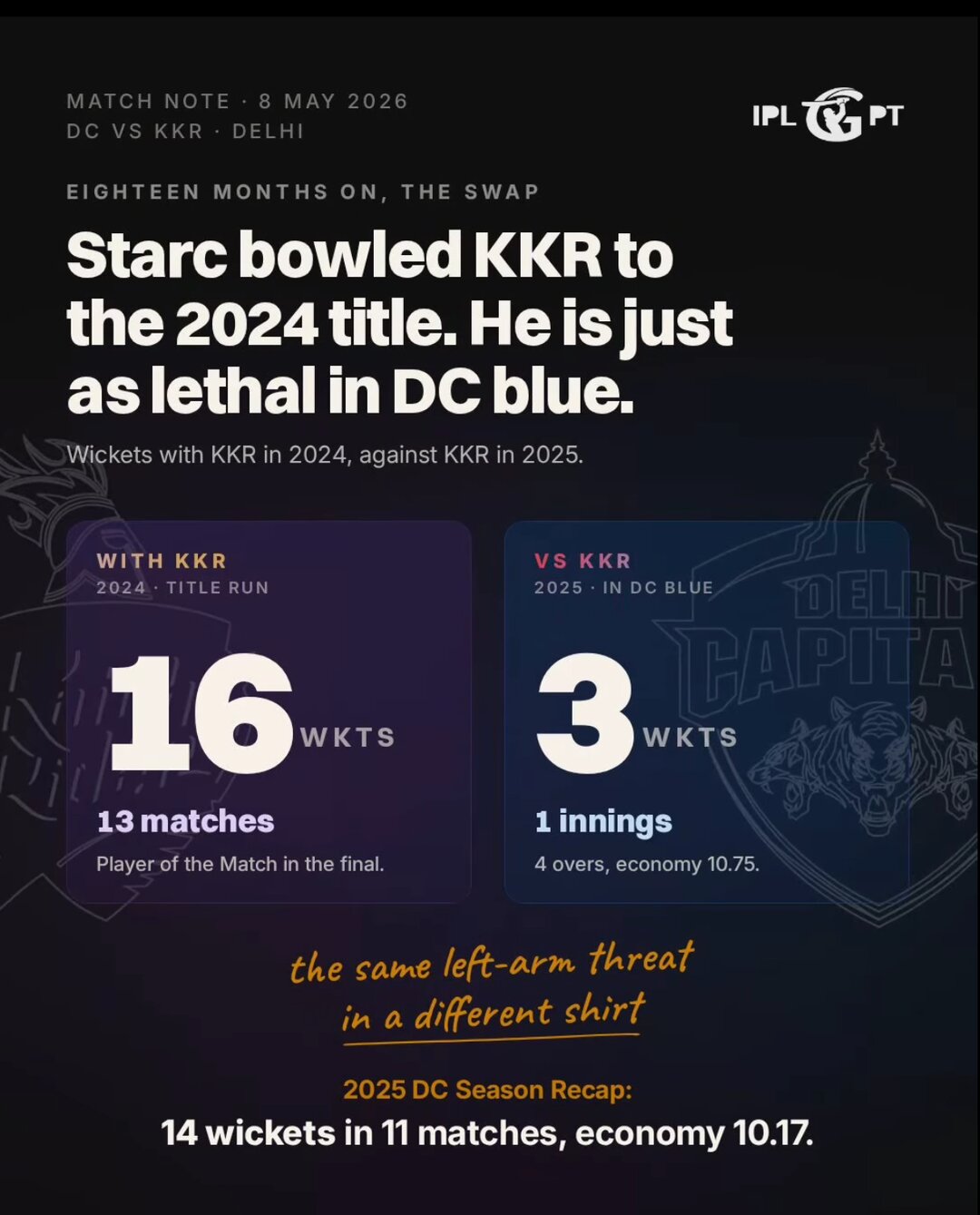
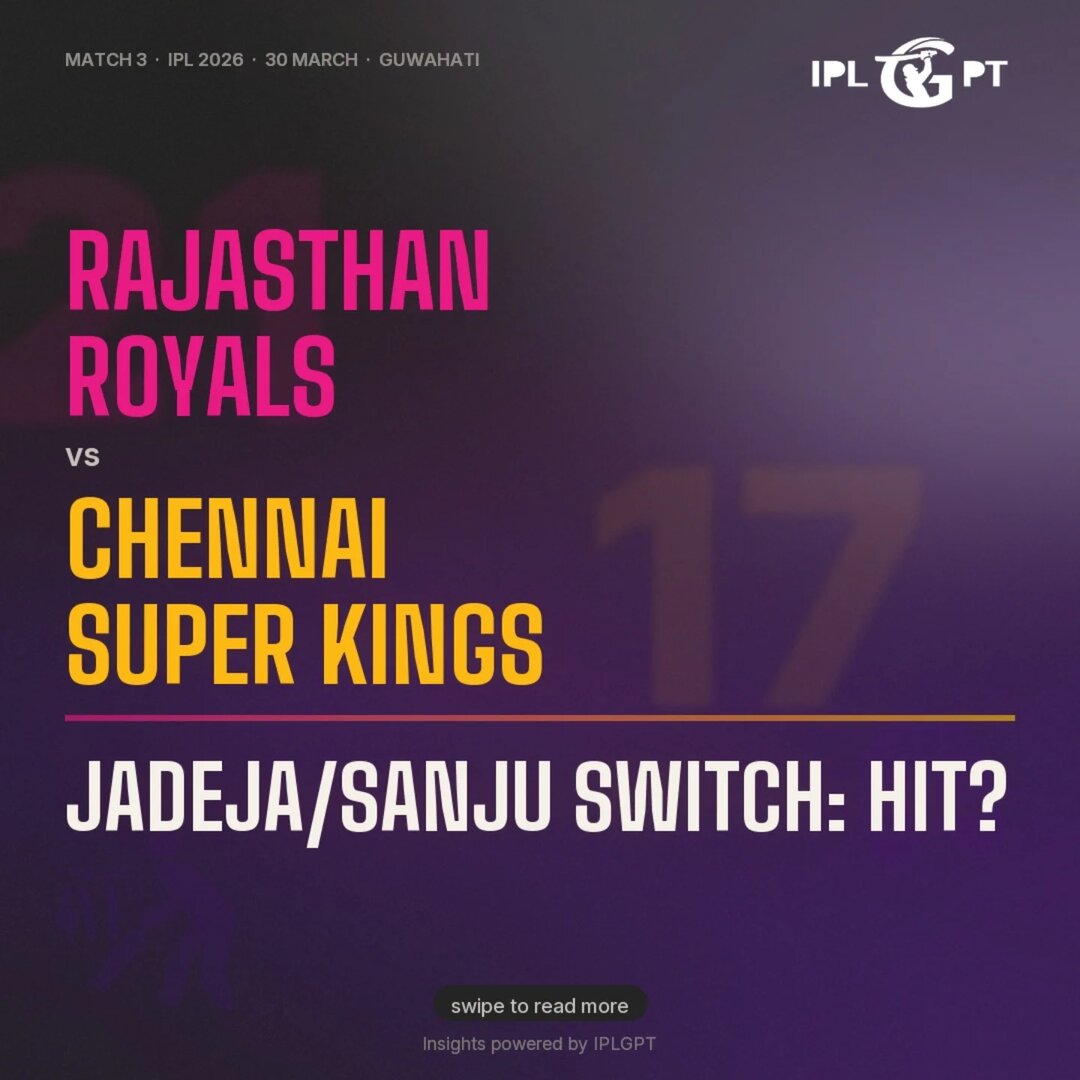
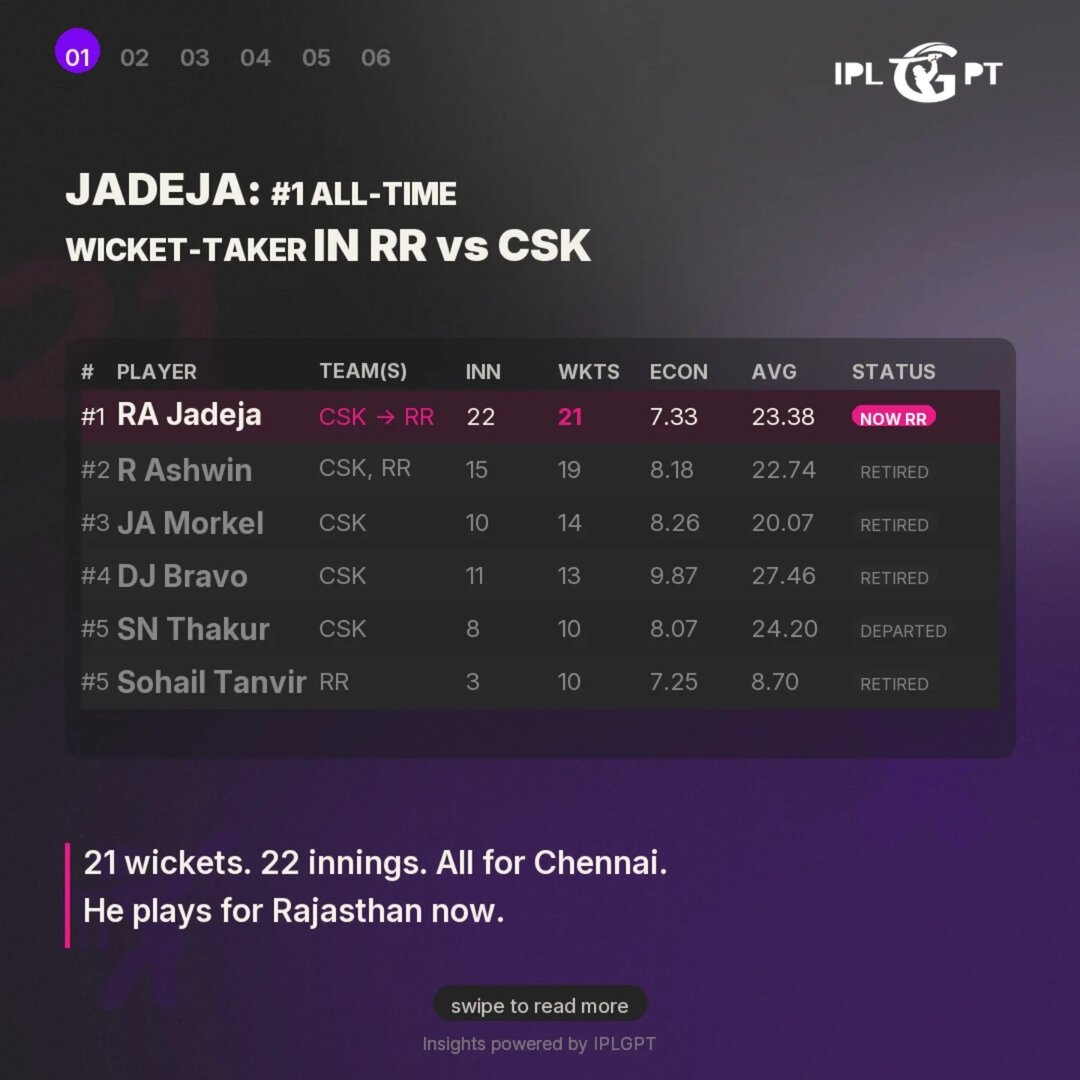
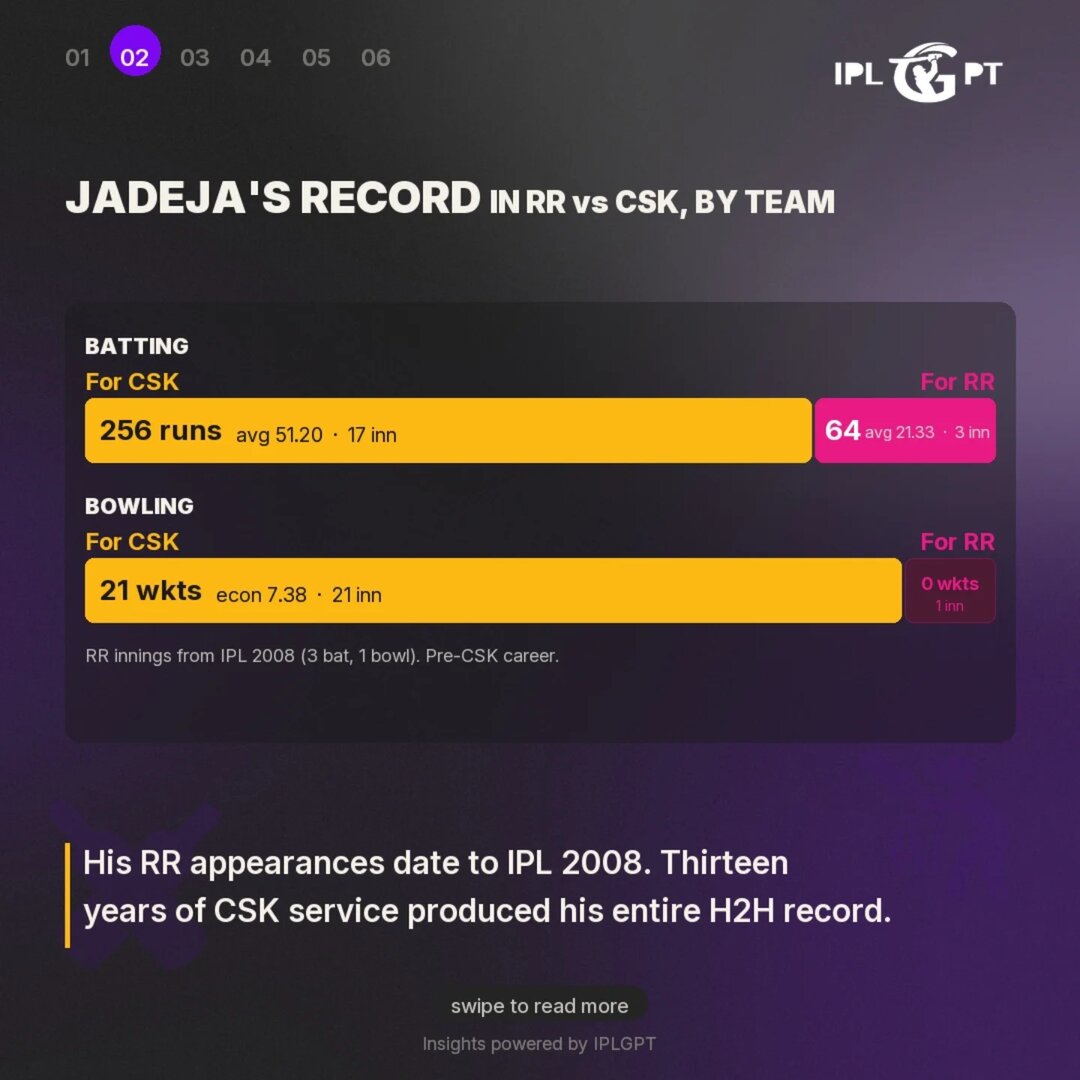
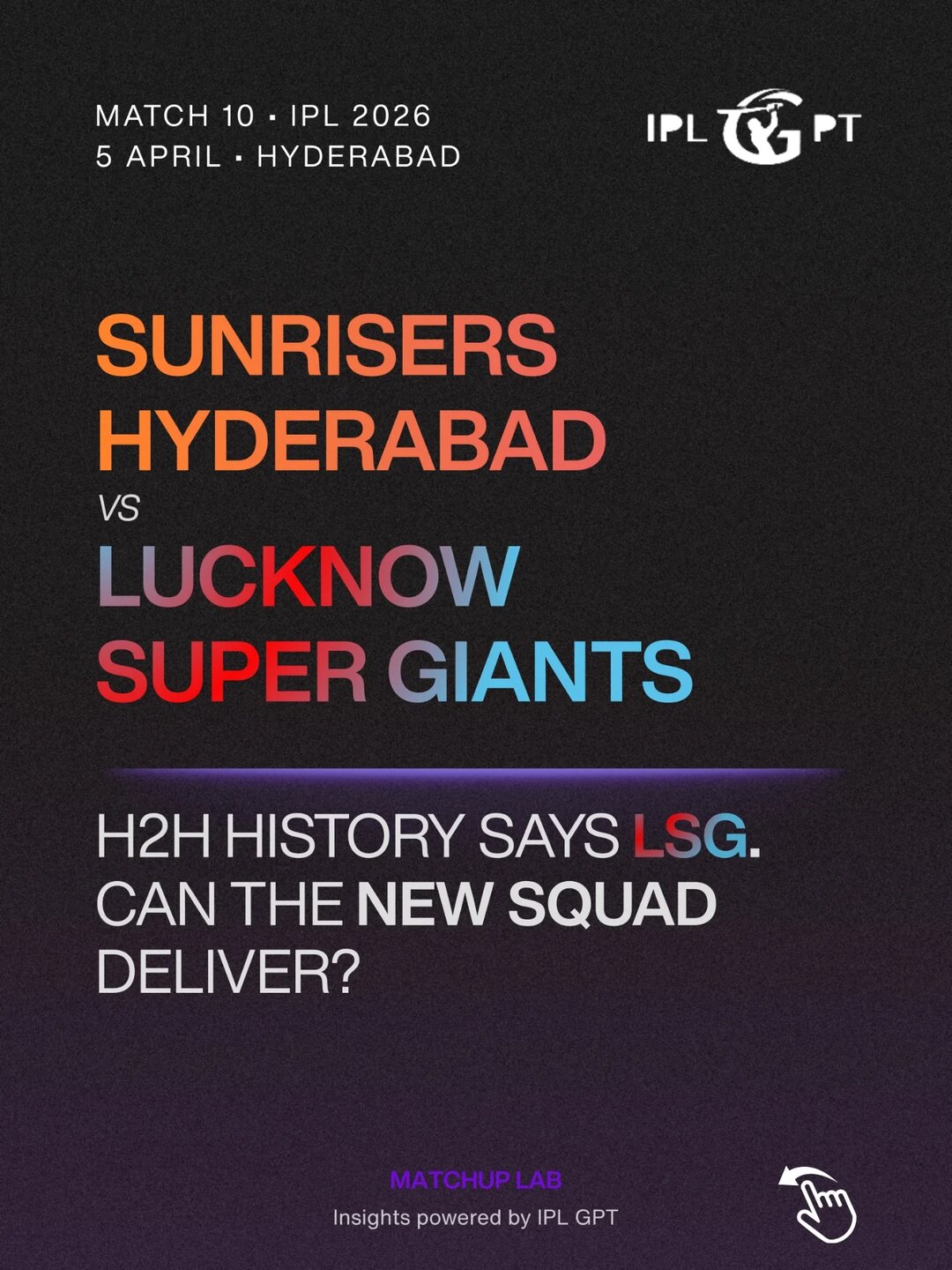
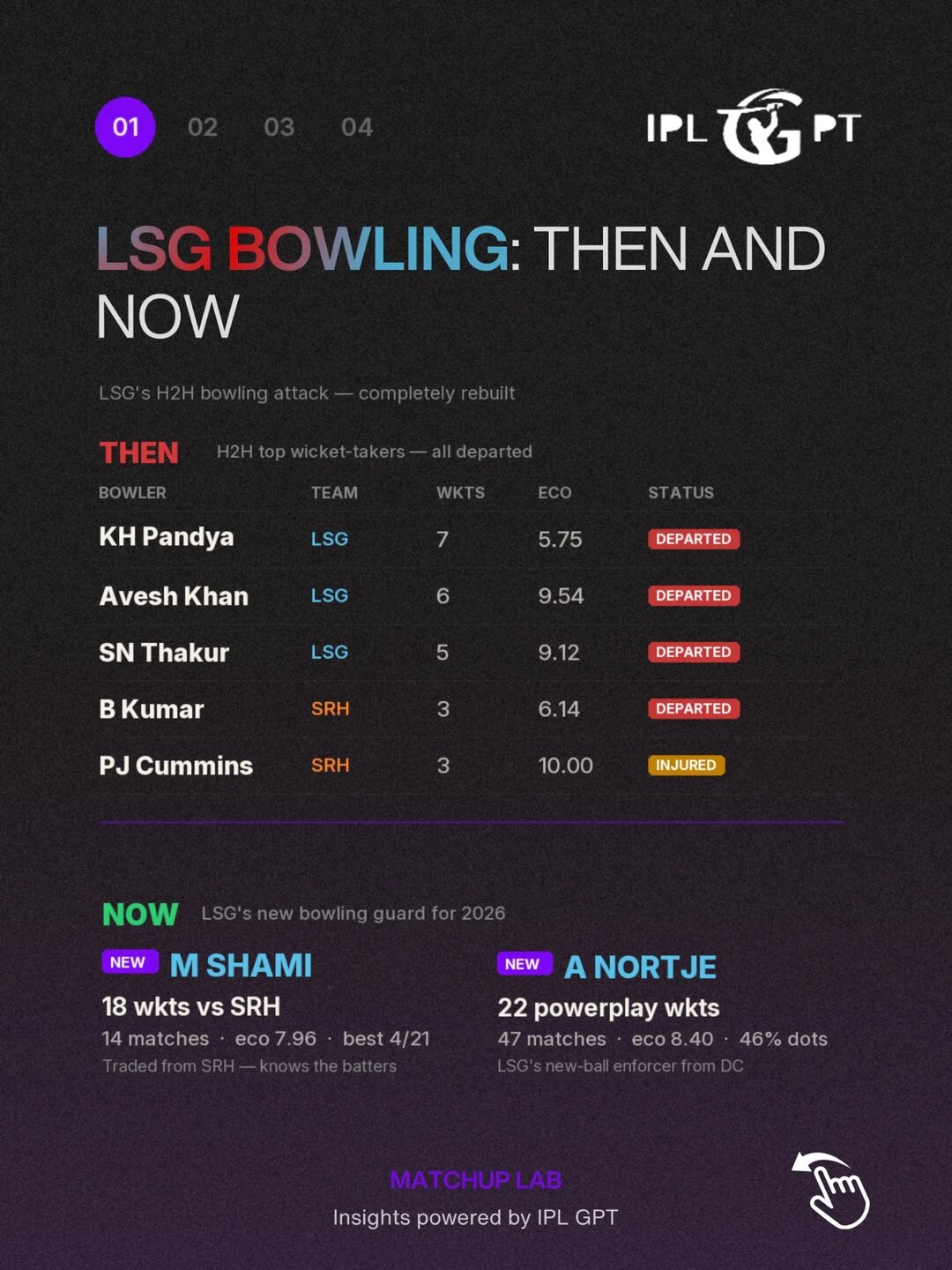
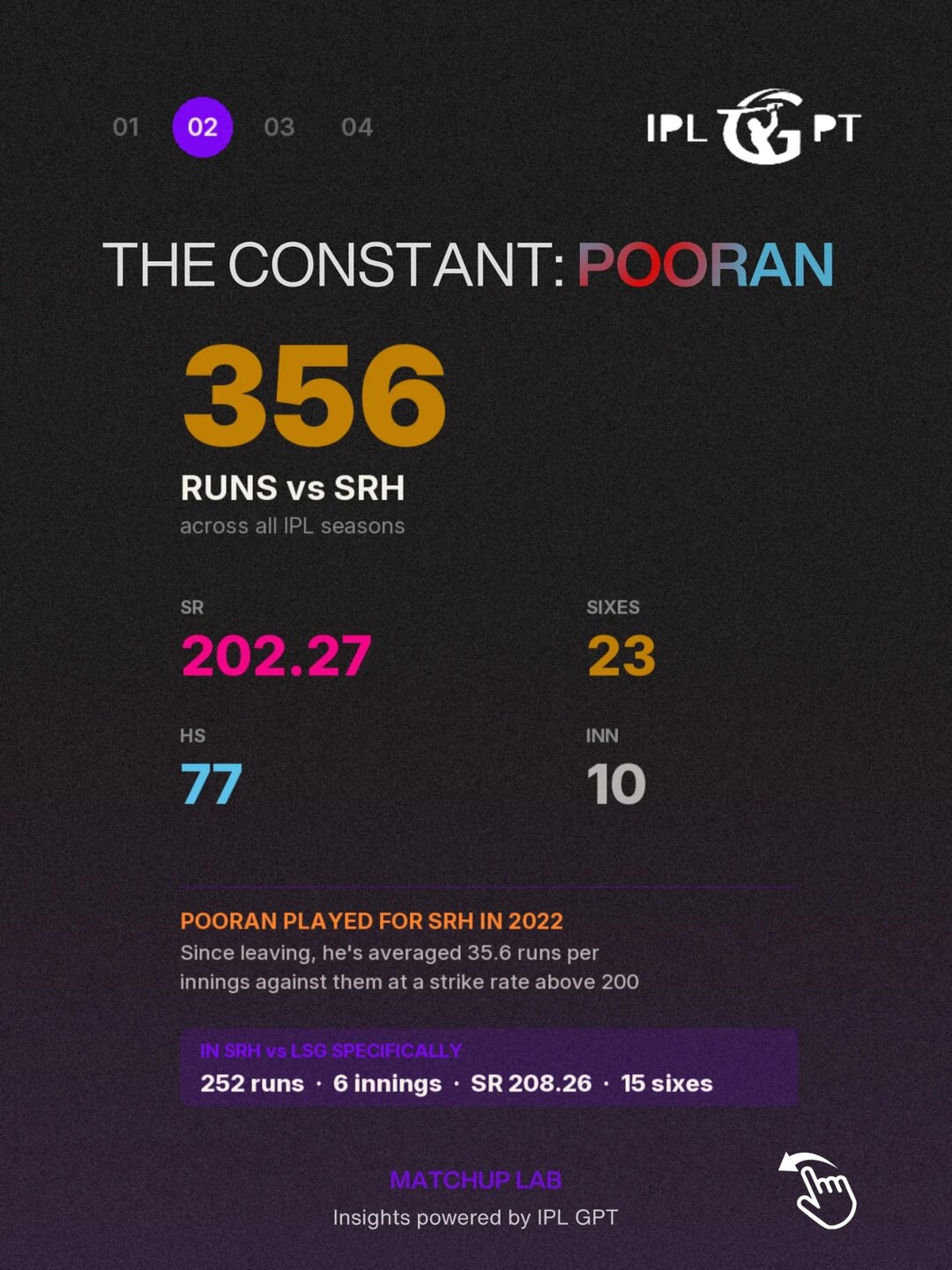
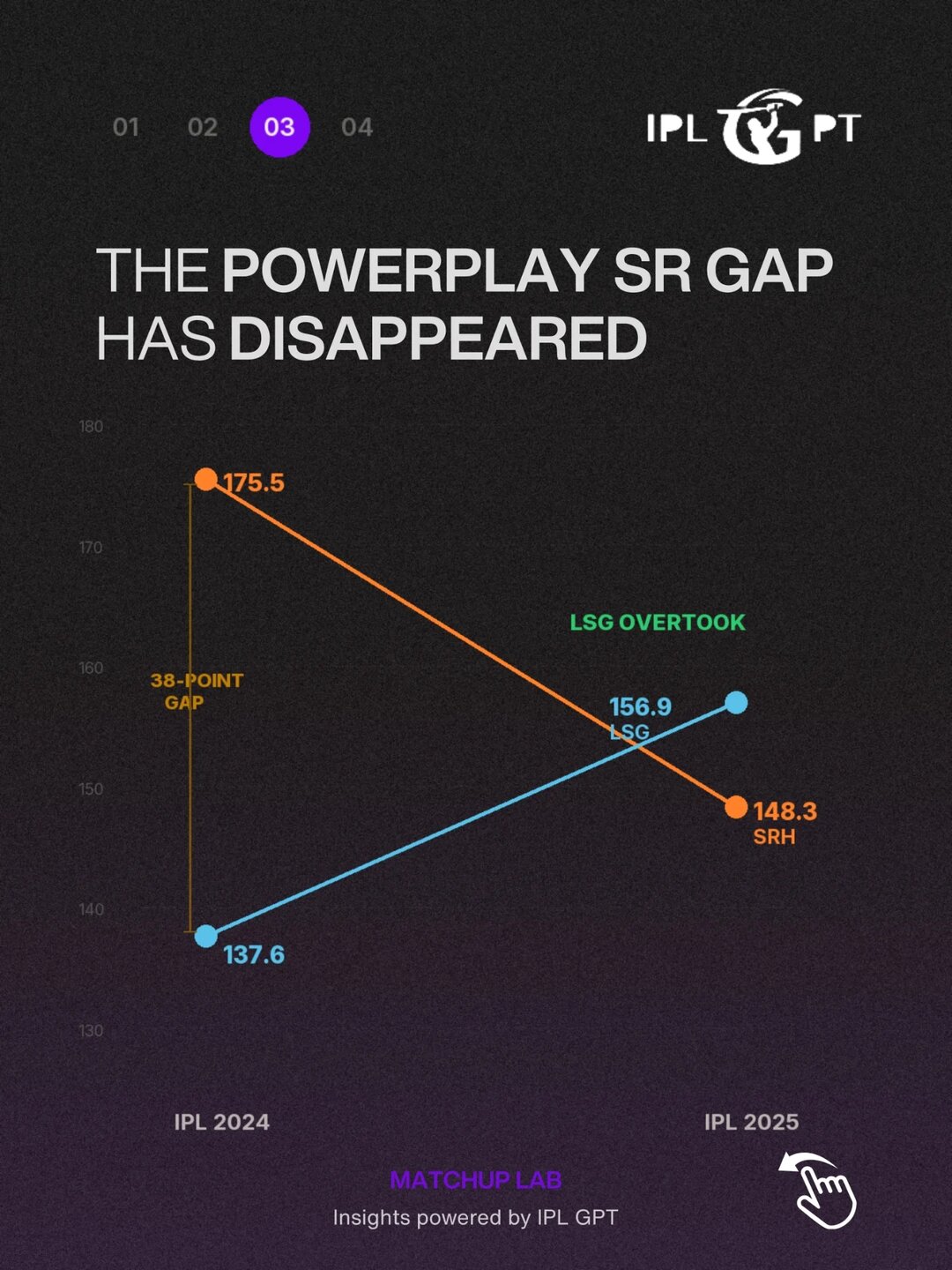
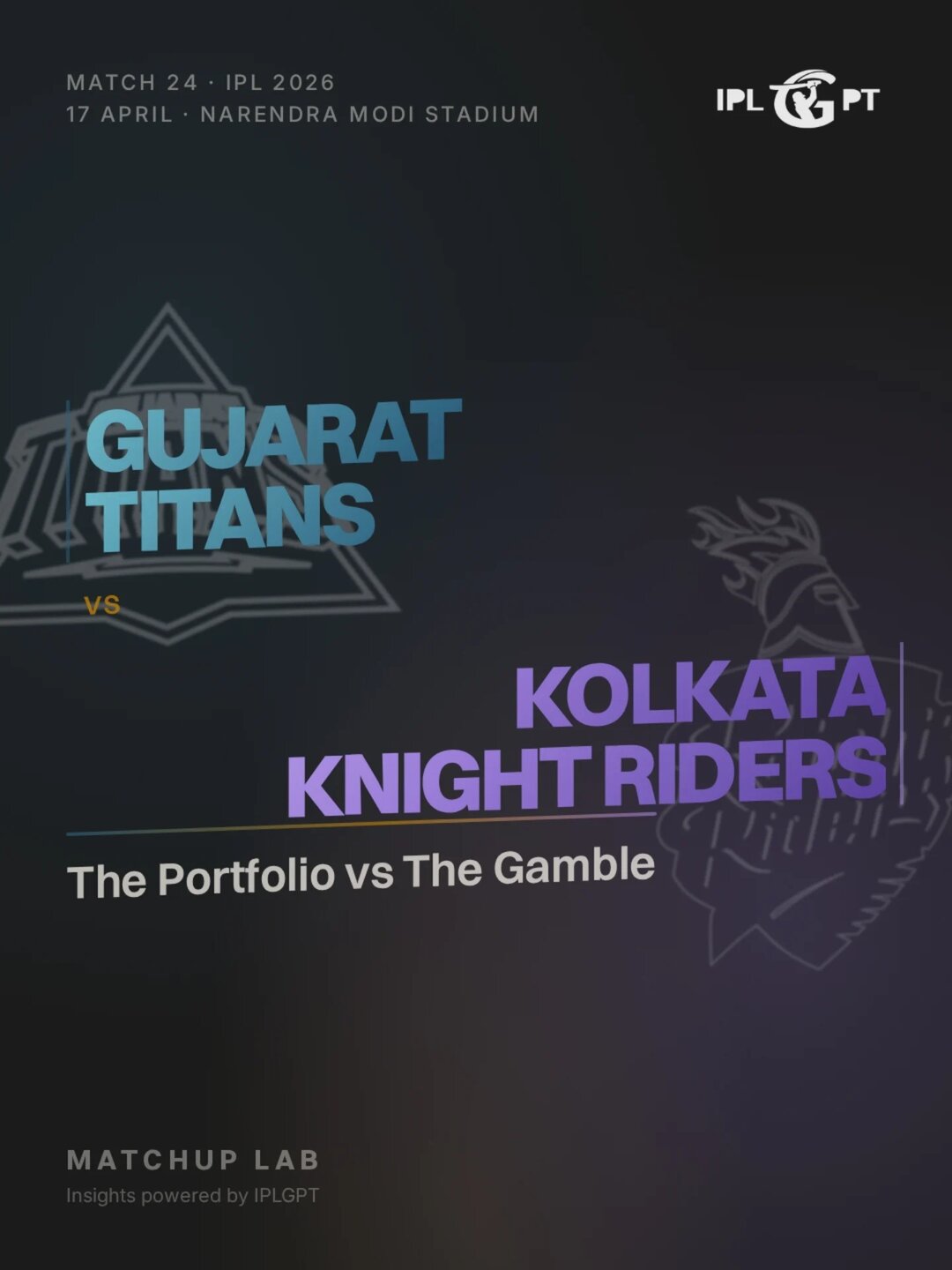
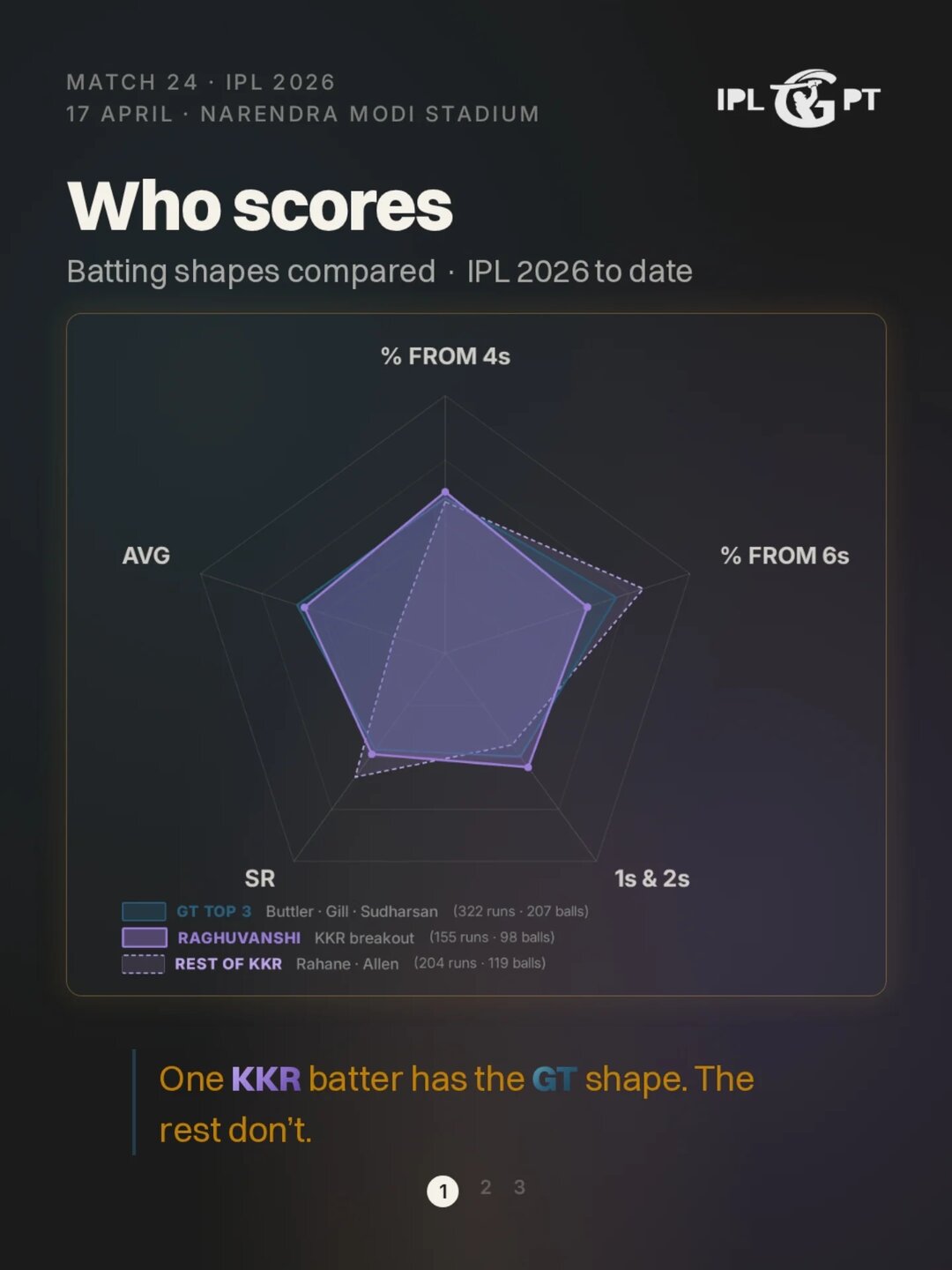
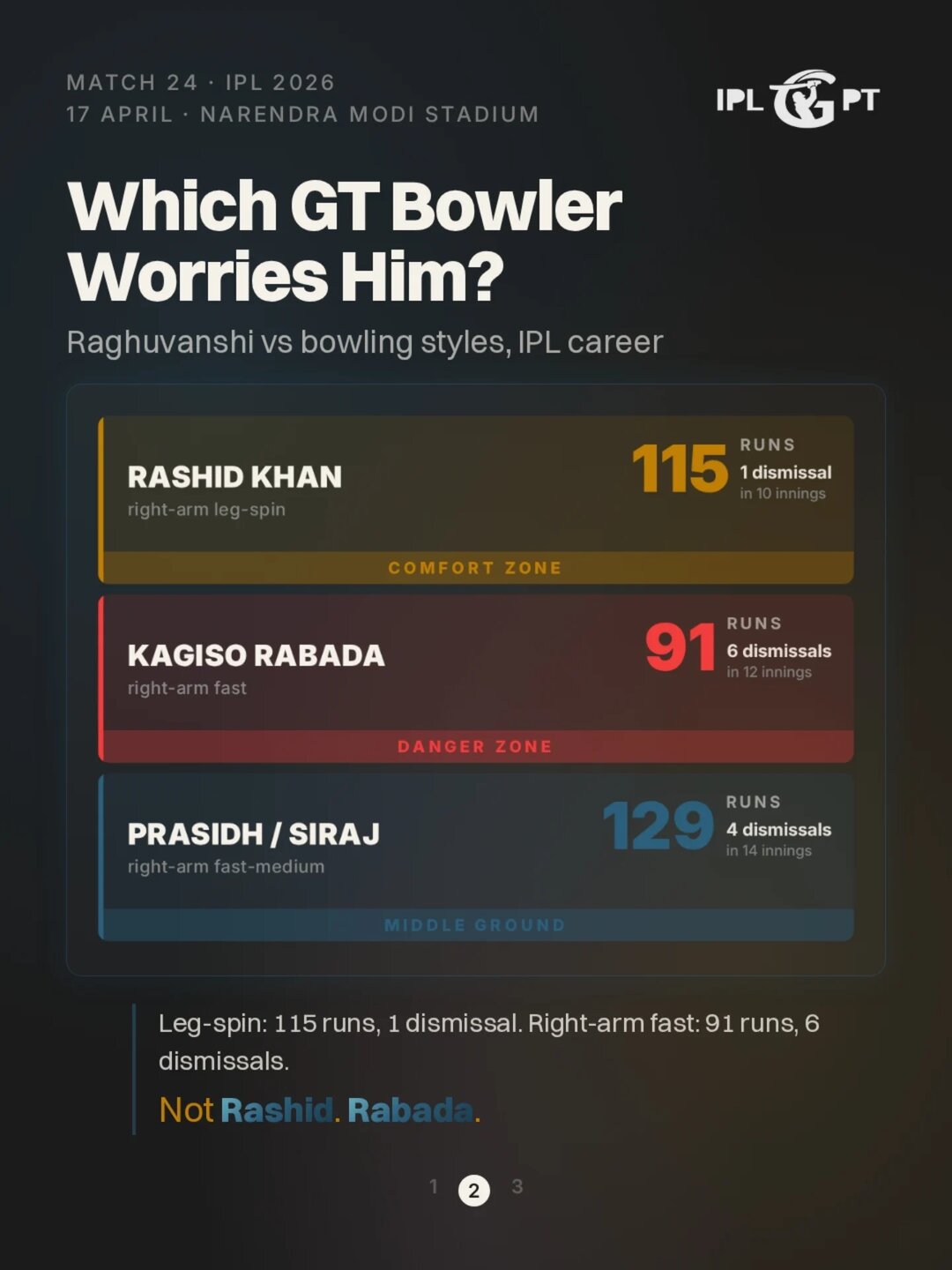
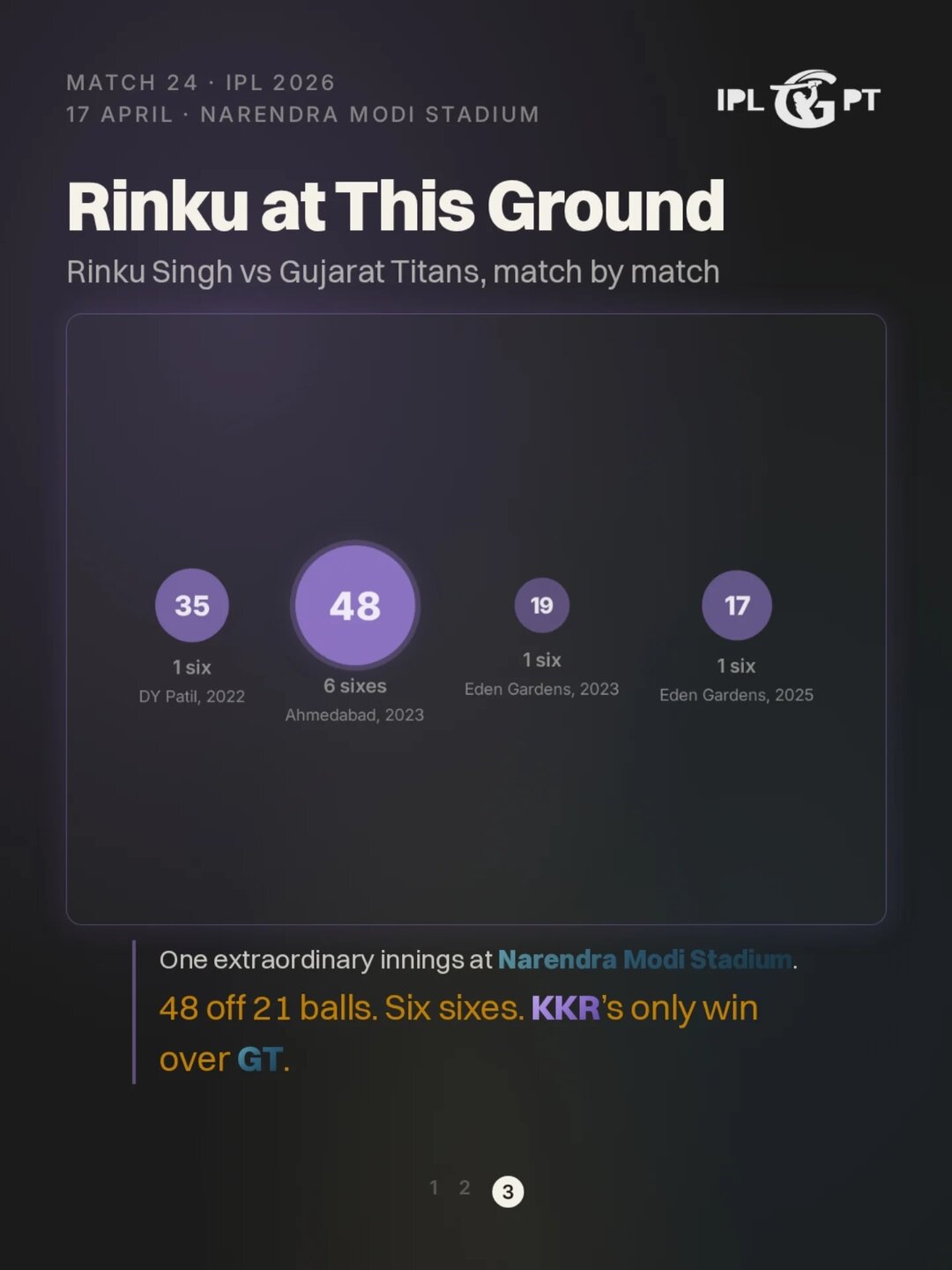
The engine is easiest to judge in sequence. Four editions from the 2026 season: the head-to-heads began as seven slides built on tables; Matchup Lab cut an edition to five, one claim per screen; the chart vocabulary grew from bars to batting-shape radars; and the last is a match note built in Remotion, moving numbers over a still frame. Every one shipped through the same gates.
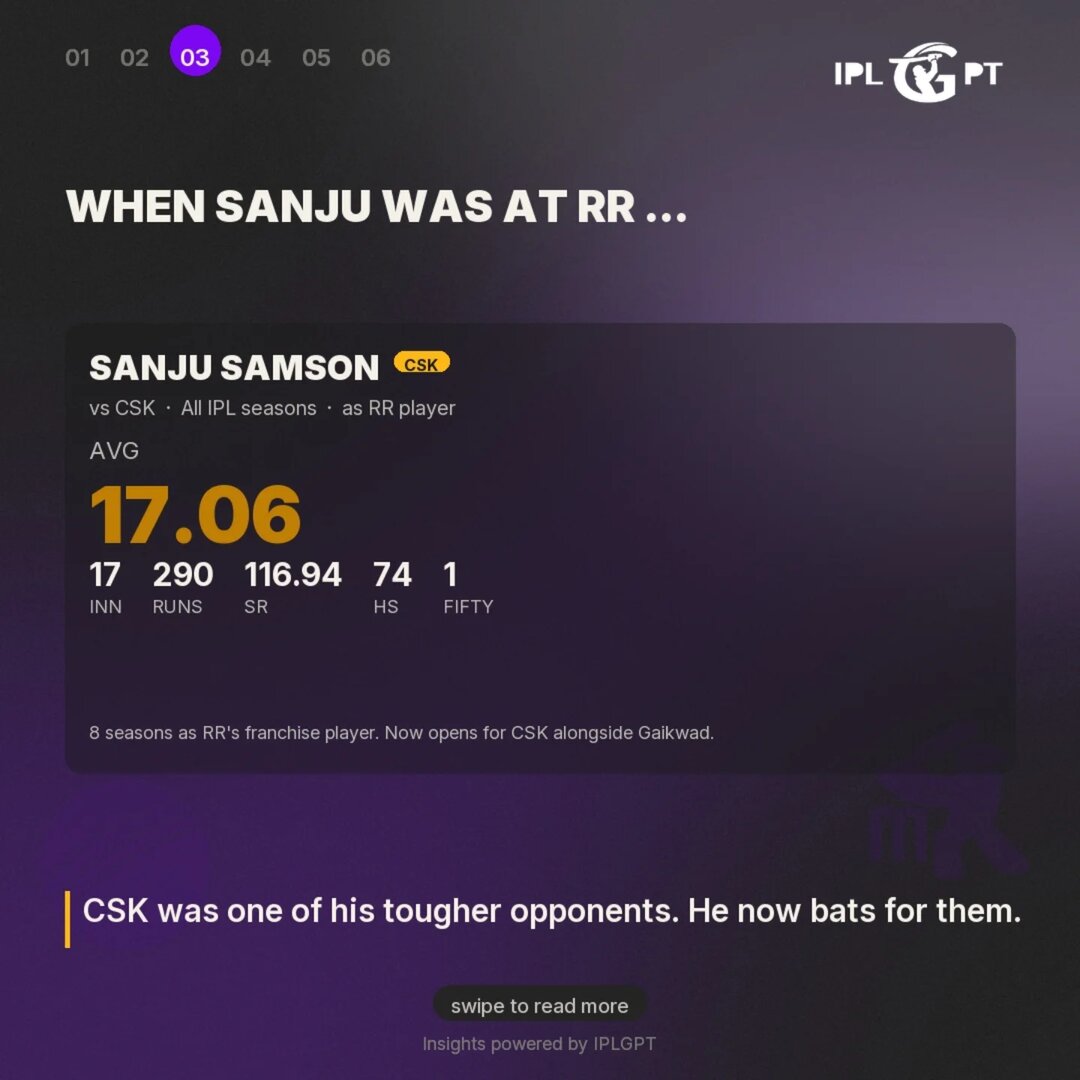
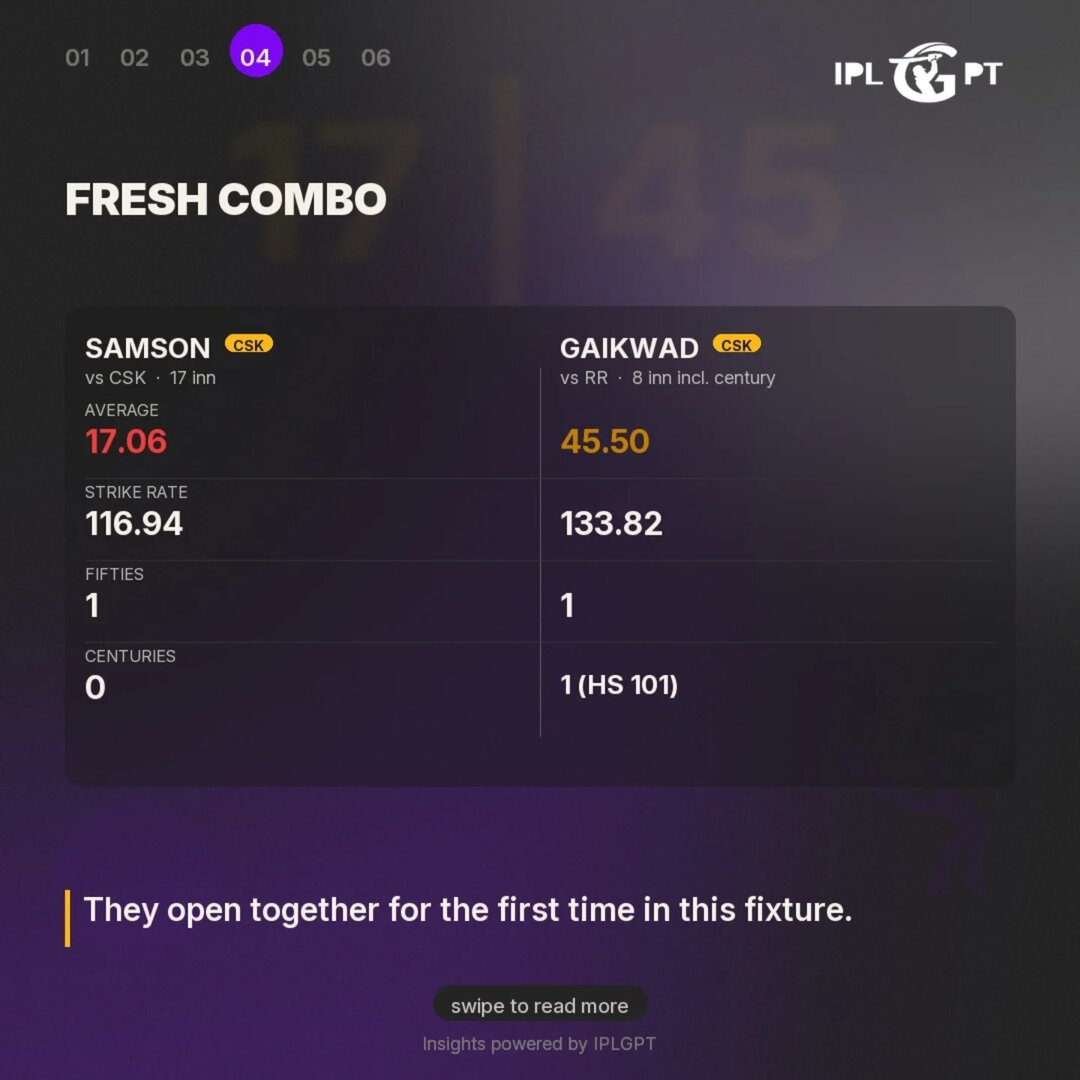
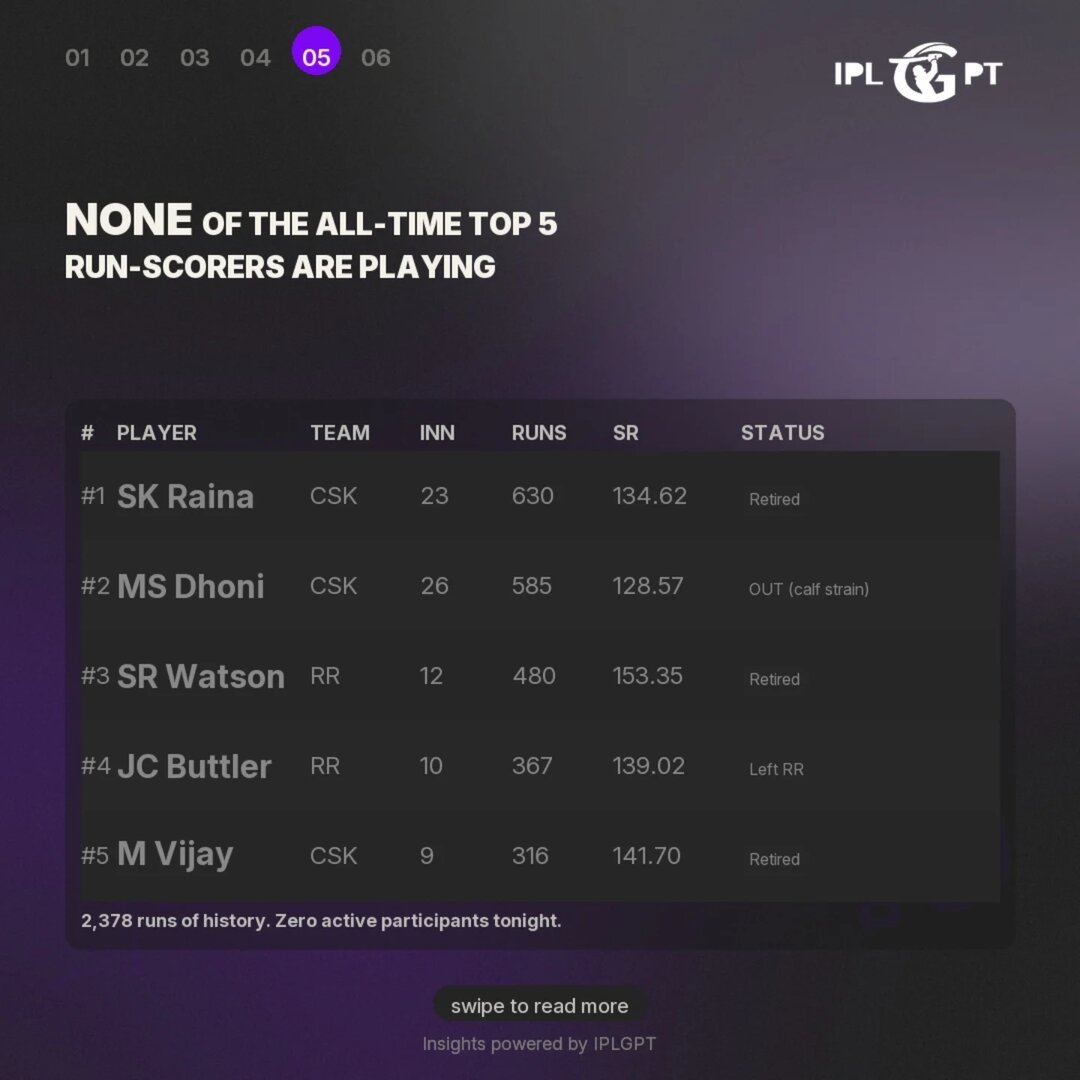
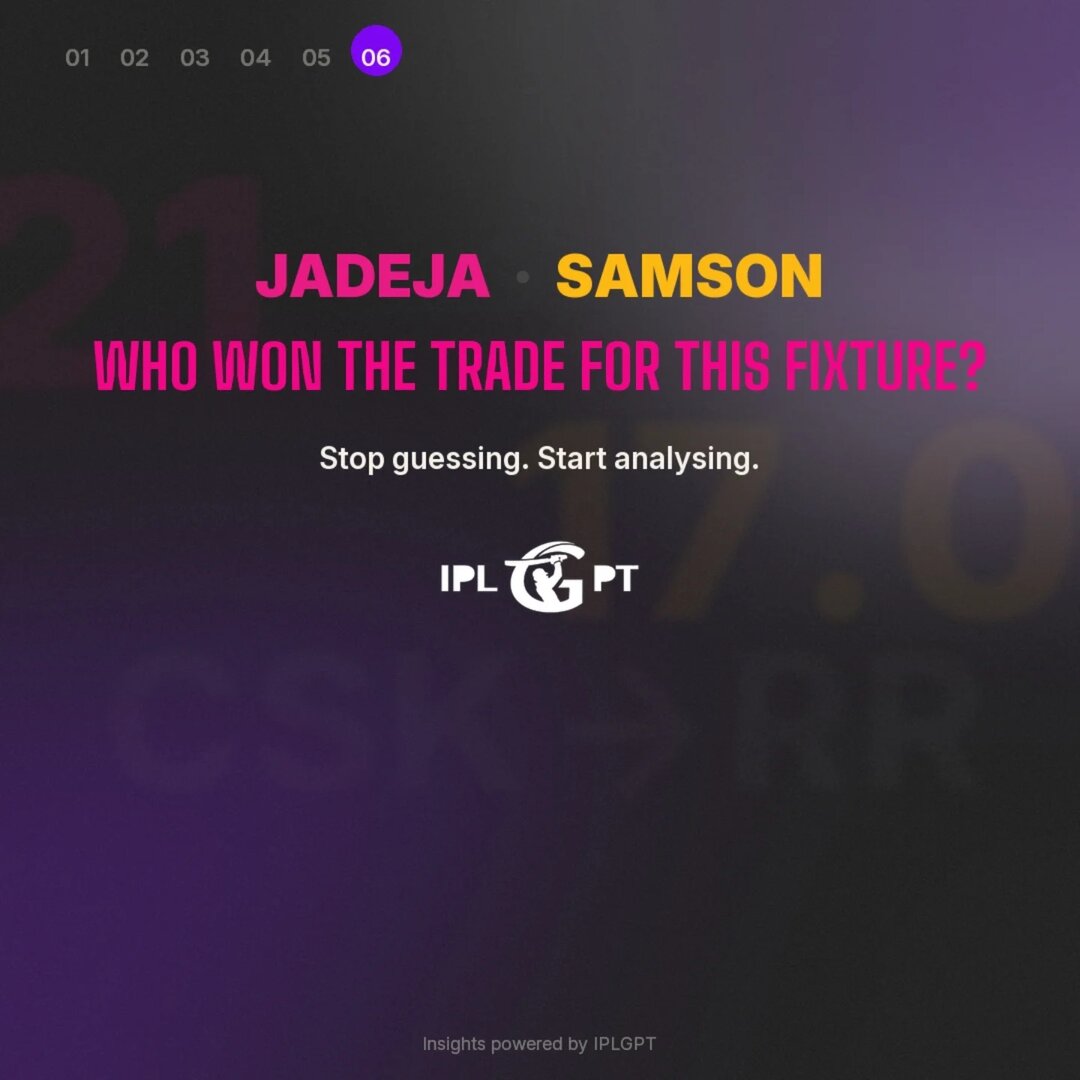
Head-to-head · 30 MarchSeven slides on the Jadeja and Samson trade, built on tables. Posted 30 March 2026Matchup Lab · 5 AprilThe format cut to five slides, one claim per screen. Posted 5 April 2026Matchup Lab · 17 AprilBatting shapes compared on a radar. Posted 17 April 2026Watch on InstagramMatch note · 8 MayBuilt in Remotion and published as a reel: moving numbers over a still frame. Watch it on Instagram
The published match card · GT vs RCB, 30 April 2026
Published as an eight-slide Instagram carousel in May 2026